


Players interested in dice games can explore craps gambling in New Zealand to learn about the basic rules, betting options, and common strategies. Understanding the odds and available game formats can help readers make more informed decisions.
Understanding the fundamentals is essential before playing any card game, and blackjack rules for New Zealand players provide a useful starting point. Learning how card values, dealer rules, and basic decisions work can make the game easier to follow.
Choosing an online platform requires attention to game variety, payment methods, and transparent terms. This guide to blackjack sites in New Zealand explores important features to consider when comparing platforms and reviewing blackjack odds.
Finding a suitable platform for dice games starts with understanding the available features and betting formats. Explore the best craps casinos in New Zealand to learn what to look for in game selection, platform security, and clearly explained terms.
Cryptocurrency users may be interested in platforms that support blockchain-based payments and digital assets. This overview of the best Ethereum casinos in New Zealand highlights factors such as transaction policies, supported currencies, and platform transparency.
Craps combines dice rolls with a variety of betting options and probability-based decisions. Learn more about the best craps options for New Zealand players to understand common wagers, payout structures, and the odds associated with different bets.
Welcome offers can vary considerably in value depending on their conditions and wagering requirements. This mathematical guide to first deposit bonus casinos in NZ explains how to compare promotional terms and assess the practical value of introductory offers.
Practising without risking real money can help beginners become familiar with card values and gameplay decisions. Discover free blackjack in New Zealand to learn about demo games, simulators, and ways to practise basic strategies in a no-stakes environment.
European roulette is known for its single-zero wheel, which affects the mathematical odds of many bets. This guide to European roulette in New Zealand covers the wheel layout, common wagers, payout rules, and key considerations when evaluating online games.
Blackjack players can choose between different table formats, rules, and playing environments. Learn more about blackjack tables in New Zealand to understand the differences between land-based and online games, including table limits and rule variations.
Making informed decisions in blackjack starts with understanding probabilities and the impact of each possible move. Explore blackjack strategies for New Zealand players to learn about basic strategy charts, hand decisions, and ways to understand the house edge.
Free spins promotions can offer an opportunity to try selected slot games under specific conditions. This overview of no-deposit free spins in NZ explains common eligibility rules, game restrictions, and wagering requirements to review before accepting an offer.
Demo games provide a way to explore casino-style entertainment without making an initial deposit. Discover free casinos in New Zealand to learn how no-deposit access and practice modes work, while checking the terms and limitations of each platform.
Roulette simulators allow players to become familiar with betting layouts and game mechanics without wagering real money. Explore free roulette play in New Zealand to understand demo modes, random number generation, and the mathematical probabilities behind common bets.
No-deposit promotions can differ in their eligibility criteria, available games, and withdrawal conditions. This guide to bonus free spins in New Zealand outlines the main features to compare when reviewing introductory offers, including expiry dates and wagering requirements.
Is it too cold to walk your dog?
Welcome to our article on how cold is too cold and hypothermia in dogs. Have you ever wondered how cold is too cold for winter dog walks or what the signs of hypothermia are? This article will help you decide how cold is too cold for your dog and also the signs of hypothermia.
As the nights draw in and the temperatures begin to fall, it is important to be aware of how cold is too cold when thinking about taking your best friend out for a winter walk. Also don’t forget to be safe and be seen on winter night walks for both you and your furry best friend.
For the purposes of this article, we are not being breed specific. It is generally considered that temperatures below 7 degrees Celsius is where most dogs will feel a little uncomfortable. This doesn’t mean that as the temperature drops below 7 degrees Celsius you shouldn’t take your best friend out for a walk because there are several measures you can take to protect your dog.
If it’s very frosty or snowing then you can buy jumpers to protect your dog from the cold, the snow, and depending on the dog’s coat length little snowballs that form on the coat.
If there is snow on the ground then short lead walks are best because of the snow accumulating in between the pads and toes on their feet and snowballs on the legs/ stomach, you can buy dog boots to help protect their feet from snow impaction. There are other products such as ‘Mushers Secret’ which as the name suggests Mushers use on their sledding dogs to protect their paws from the snow.
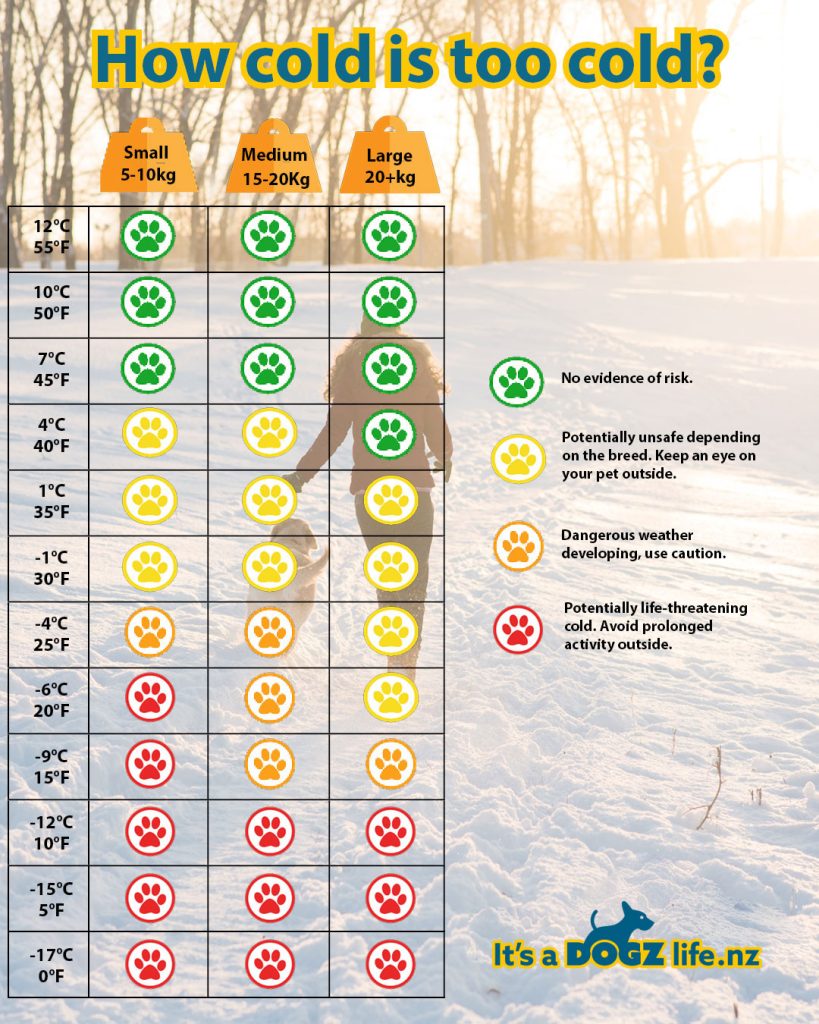
Too cold to walk?
Depending on where you are walking and the depth of the snow a lead walk is the best idea because either snow can cover up holes, edges of the banks of ditches, streams and rivers. As the temperature drops it is advisable to not to let them swim or paddle in ditches/rivers or streams as the water temperature will be a lower than the current air temperature, putting them at more risk of hypothermia.
During the winter months, if you drive to your walking spot then it is recommended that you have a towel and a drying coat or jumper to dry your dog off and keep them warm on the way home, you can also buy energy bars designed for dogs, so that they can have a little more energy to keep them warm. These are especially good if your dog is out working all day with you or on a particularly cold day after a walk.
Signs of Hypothermia in dogs
Hypothermia is when the body temperature of the dog falls below the normal range of 38.3°C and 39.2°C, it is important to note that dogs have a higher body temperature compared to their human owners, which is 36.5°C to 37.5°C.
There are three different types of hypothermia, which are classified by temperature ranges.
Mild hypothermia – 32°C to 35°C
Moderate hypothermia – 28°C to 32°C
Severe hypothermia – is anything below 28°C
The signs of hypothermia are:
- Tiredness
- Shivering
- Pale skin
- Muscle stiffness
- Shallow breathing
- Low blood pressure
- Fixed and dilated pupils (severe cases).
If you suspect your dog has hypothermia we recommend you seek veterinary attention as soon as possible as they will be able to take your dog’s temperature, advise, and treat accordingly. Vets4pets has produced an article about hypothermia in pets for further reading.
We hope you found our How Cold is too cold and Hypothermia in dogs article useful, why not get ready for the summer months and bookmark How Hot is Too Hot and Heat Stroke so you know when it is too hot to exercise your dog and the signs of heatstroke.