

Players interested in dice games can explore craps gambling in New Zealand to learn about the basic rules, betting options, and common strategies. Understanding the odds and available game formats can help readers make more informed decisions.
Understanding the fundamentals is essential before playing any card game, and blackjack rules for New Zealand players provide a useful starting point. Learning how card values, dealer rules, and basic decisions work can make the game easier to follow.
Choosing an online platform requires attention to game variety, payment methods, and transparent terms. This guide to blackjack sites in New Zealand explores important features to consider when comparing platforms and reviewing blackjack odds.
Finding a suitable platform for dice games starts with understanding the available features and betting formats. Explore the best craps casinos in New Zealand to learn what to look for in game selection, platform security, and clearly explained terms.
Cryptocurrency users may be interested in platforms that support blockchain-based payments and digital assets. This overview of the best Ethereum casinos in New Zealand highlights factors such as transaction policies, supported currencies, and platform transparency.
Craps combines dice rolls with a variety of betting options and probability-based decisions. Learn more about the best craps options for New Zealand players to understand common wagers, payout structures, and the odds associated with different bets.
Welcome offers can vary considerably in value depending on their conditions and wagering requirements. This mathematical guide to first deposit bonus casinos in NZ explains how to compare promotional terms and assess the practical value of introductory offers.
Practising without risking real money can help beginners become familiar with card values and gameplay decisions. Discover free blackjack in New Zealand to learn about demo games, simulators, and ways to practise basic strategies in a no-stakes environment.
European roulette is known for its single-zero wheel, which affects the mathematical odds of many bets. This guide to European roulette in New Zealand covers the wheel layout, common wagers, payout rules, and key considerations when evaluating online games.
Blackjack players can choose between different table formats, rules, and playing environments. Learn more about blackjack tables in New Zealand to understand the differences between land-based and online games, including table limits and rule variations.
Making informed decisions in blackjack starts with understanding probabilities and the impact of each possible move. Explore blackjack strategies for New Zealand players to learn about basic strategy charts, hand decisions, and ways to understand the house edge.
Free spins promotions can offer an opportunity to try selected slot games under specific conditions. This overview of no-deposit free spins in NZ explains common eligibility rules, game restrictions, and wagering requirements to review before accepting an offer.
Demo games provide a way to explore casino-style entertainment without making an initial deposit. Discover free casinos in New Zealand to learn how no-deposit access and practice modes work, while checking the terms and limitations of each platform.
Roulette simulators allow players to become familiar with betting layouts and game mechanics without wagering real money. Explore free roulette play in New Zealand to understand demo modes, random number generation, and the mathematical probabilities behind common bets.
No-deposit promotions can differ in their eligibility criteria, available games, and withdrawal conditions. This guide to bonus free spins in New Zealand outlines the main features to compare when reviewing introductory offers, including expiry dates and wagering requirements.
How Hot is Too Hot and Heatstroke
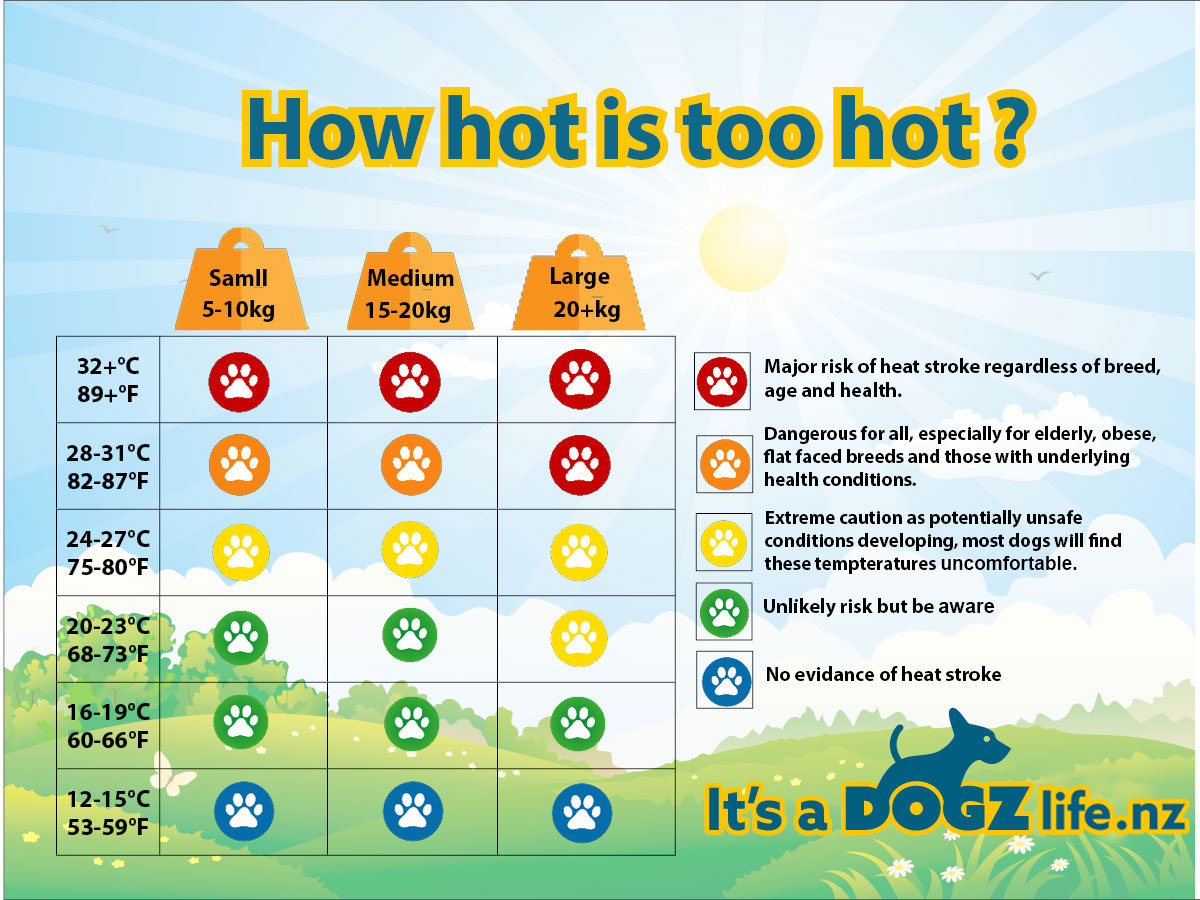
Welcome to our article on how hot is too hot and heat stroke in dogs. As the summer arrives and temperatures increase, one question we’re often asked here at It’s a dogz.life is ‘How hot is too hot to walk my dog?’ It is important to be aware of the risks of exercising your dog in the heat and humidity and the signs of heatstroke. See our infographic for a guide to temperatures and the risks to your dog.
So what are the signs of heatstroke?
Heatstroke is where the dog has a very high body temperature which hasn’t been caused by underlying illness but due to the environment the dog is in. Dogs can only sweat through their paws and through panting. If the external temperature and humidity is too high, then this prevents the dog from properly cooling down and heat stroke occurs. It isn’t just the temperature and humidity, there are several other factors will contribute as well:
- Obesity
- Lack of water
- Enclosed space/poor ventilation
- Intense exercise
- Young/Old age
- Heart disease/respiratory disease
- Lack of acclimatisation
Another factor that can greatly increase the risk of heat stroke is the breed of the dog. The top 7 brachycephalic or flat-faced/short nose breeds that are highly likely to suffer heatstroke are Pug (6 times more likely to suffer heatstroke, compared to the Labrador), English Bulldog (14 times more likely), French Bulldog, Dogue de Bordeaux, Pomeranian, Shih Tzu and the Boston Terrier (PDSA June 2021). Other breeds such as those with thick heavy coats such as Huskies and Newfoundlands are also at risk. If the conditions are wrong then any breed of dog is at risk.
According to the PDSA (June 2021) three of the most common heatstroke triggers are:
- Overheating during exercise – 74% of heatstroke cases
- Being outside in hot weather (including just sitting outside) – 12.9% of cases
- Being trapped in a hot car – 5.2% of cases.
Signs of heatstroke
- Early Signs
- Panting (progresses into noisy/distressed panting as heatstroke progresses)
- Restlessness/agitation, pacing, seeking shade/water
- Drooling
- Red tongue or gums
- Increased heart rate
- Vomiting or diarrhoea
The advanced stages of heatstroke are:
- Lethargy
- Confusion
- Weakness/collapse
- Seizures
The Royal Veterinary Collage offers the following advice if you suspect your dog has heatstroke:
- Take your pet somewhere cool, ideally a well-ventilated area, or use a fan
- Offer them small sips of water (do not force them to drink).
- Cool them down by pouring small amounts of cool – lukewarm water on them. It’s important not to use cold water as this can reduce blood flow to the skin, reducing their ability to cool down.
- Alternatively, drape a cool wet towel over them. This should be changed every five minutes as it will no longer be effective once it warms up.
- Once you’ve started these steps, call your vets who will be able to advise you further. Even if your pet seems to be OK it’s important to have them checked (unless told otherwise), as the more serious signs of heatstroke may not be immediately apparent.
Your vet will examine your pet and carry out a full assessment including a temperature check. If they are concerned that your pet is suffering from heatstroke, they may advise that they are admitted for tests, supportive treatment, or observation until the signs of heatstroke have resolved.
Tips for preventing heatstroke:
Avoid walking during the hottest part of the day
- Avoid walking on pavements as the heat that is absorbed by the pavement/road and reflected back can burn the dog’s paws.
- If you do take your dog out make sure you walk in a shaded area, next to a stream/river so they can drink or cool off.
- Keep walks short and early morning or late evening when it’s cooler.
- Limit access to outside and make sure the area they are in is well-ventilated.
- Make sure they have access to shady areas and plenty of fresh water.
- Do not leave them unattended in vehicles.
- Use ice cubes in their water bowls or give them ice cubes to keep them cool, this is perfectly safe so long as they aren’t suffering from heatstroke.
Always remember that it doesn’t just have to be hot for heatstroke to occur.
Here is the link to an article on heatstroke in dogs by Franklin Vets for further reading.
We hope you found our how hot is too hot and heatstroke in dogs guide useful, get ready for the winter months and bookmark our article on How Cold is Too Cold and Hypothermia In Dogs.
Too hot to walk?